Ulises Carrión, a bookwork in many places
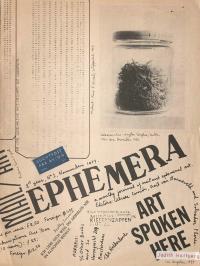
Ulises Carrión, Aart van Barneveld, and Salvador Flores, Ephemera Issue 1, 1977. Courtesy of the Getty Research Institute.
Ulises Carrión, a bookwork in many places
Part of
With
May 24–August 9, 2026
Opening: Sunday, May 24, 3–6pm
Spanning the 1970s through the 1990s, a bookwork in many places brings together artist books, correspondence, video, and ephemera that trace Mexican-born Ulises Carrión’s engagement with artist networks in the West Coast, with a particular focus on Southern California. By centering a regional context, the exhibition considers Carrión’s influence on the ways artists, librarians, publishers, and alternative spaces collectively reimagined systems of exchange through printed matter.
After settling in Amsterdam in 1972, Carrión found a community committed to reaching audiences beyond geographic borders, one that supported the rapid dissemination of artist books through collective social networks. One of these communities includes Other Books and So (OBAS; 1975-79), the artist-run space co-founded by Carrión and Aart van Barneveld in Amsterdam. Functioning simultaneously as a bookstore, archive, and exhibition space, OBAS was dedicated to the display and circulation of artist books and experimental printed matter. In collaboration with Salvador Flores, Carrión and van Barneveld also published the twelve-issue journal Ephemera (1977-78), which compiled fragments of mail received at OBAS into large-scale, seemingly haphazard reproductions.
Featuring contributions from Latin American artists including Paulo Bruscky and Graciela Gutiérrez Marx, the issues of Ephemera presented at JOAN reflect the overlapping roles Carrión occupied as artist, editor, publisher, curator, situating his practice in relation to experimental artistic networks beyond European art circles. Beyond documenting these collaborative publishing networks, the exhibition considers Carrión’s evolving conception of the “bookwork” as a distinct artistic form and critical site of exchange.
The title, a bookwork in many places, references the widespread circulation of artist books, facilitated in part by emerging communication technologies that enabled artists to produce publications independently of institutional channels. In California, works such as Passport (1976) by Susan King and Eggs Verbal A-Z (1973) by Sylvia Salazar Simpson mobilized affordable, everyday materials, from staples, cardstock, and Xerox processes, to challenge conventional forms of publishing and distribution.
Responding to a shifting literary and publishing landscape, Carrión voiced an end to the traditional structure of the book. In the essay “Bookworks Revisited” (1978), later included in the compilation Second Thoughts (1980) published by Amsterdam-based VOID Distributors, Carrión proposed the “bookwork” as a means of rethinking the book by deconstructing the sequence and language of linear narrative. No longer simply a container of text, the book becomes a cultural object in which each page functions as an autonomous element within a larger structure.
Through their multiplicity and modes of mass distribution, bookworks existed simultaneously across disparate locations. In Bookworks Revisited (1986), a video documentary commissioned for a class lecture at Evergreen State College, Carrión presents a selection of artist books and mail art projects from the archive of OBAS, including works by Theresa Hak Kyung Cha, Suzanne Lacy, Edward Ruscha, and Fred Truck. Several of these same publications had previously appeared in Carrion’s 1978 institutional exhibition From Bookworks to Mailworks at the Stedelijk Museum Alkmaar in Amsterdam. That same year, Los Angeles-based art librarian Judith Hoffberg invited Lacy to present Travels with Mona (1977-78) in the exhibition Bookworks and Artwords at the Los Angeles Institute of Contemporary Art, tracing the interconnected networks through which these works circulated internationally.
Carrión and Hoffberg developed a deeply intellectual friendship over the years. Their correspondence reflects a shared commitment to expanding the reach of collaborative artistic projects. Like Carrión, Hoffberg supported artist book networks through her journal Umbrella (1978-2008), which published news, criticism, and reviews related to artist books and alternative art spaces internationally. Its inaugural issue featured a profile on OBAS, while subsequent issues trace Carrión’s movements across the United States, documenting visits to Massachusetts, New York, and Oregon, where he attended exhibitions, book fairs, and panel discussions. Together, these materials also point to Carrión’s relationships with publishers, curators, critics, art historians, and key figures in the mail art movement.
Extending Carrión’s influence into the present, the exhibition is accompanied by an archival display of artist books selected from Ulises: Assembly at Tufts University Art Galleries, organized by Ulises Books, a Philadelphia-based project space and bookshop. The project responds to an open call issued by Carrión in 1977, which invited one thousand artists to mail their own publications to OBAS. Echoing this gesture, Ulises Books invited a similarly expansive network to submit their books as an exercise of friendship and experimentation. By centering experimental art spaces shaped through collaboration, publishing, and exchange, a bookwork in many places emphasizes the continued relevance of Ulises Carrión’s ideas and their resonance within contemporary artistic networks.
Upcoming Programming
Dates and additional information for all public programs will be announced soon.
This project is part of JOAN’s second chapter of programming (April 2024–January 2026; May–August 2026), which brings together artists and collectives exploring communal structures of intervention and support as living experiments toward liberatory futures.
JOAN will have a limited-edition reprint of Umbrella, Vol. 1, No. 1 (January 1978), available.
Ulises Carrión (b. 1941, Veracruz, Mexico; d. 1989, Amsterdam, Netherlands) studied literature and philosophy at the Universidad Autónoma de México before emigrating to England, where he completed his postgraduate studies in literature at the University of Leeds. In 1972, he settled in Amsterdam where he became a central figure of the mail art movement. There, he co-founded In-Out Books and Other Books and So. Through his writing, curatorial work, and independent publishing projects, he redefined the book as a conceptual and social form. He remained in Amsterdam until his death in 1989.
Curated by Nahui Garcia
Exhibition design by Aviva Rubin
Installation by Nathan Manthey and Adam Halferty
Design by Panamá Studio
Special thanks to Zanna Gilbert and The Huntington for generously providing exhibition support. Additional thanks to the Getty Research Institute, Otis College of Art and Design, Performance Art Museum, University of California, Santa Barbara, and Ulises Books for their generous loans.
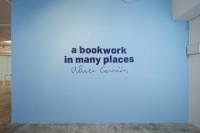
Ulises Carrión, a bookwork in many places, 2026, installation view. Photo by Evan Walsh.
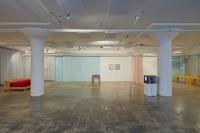
Ulises Carrión, a bookwork in many places, 2026, installation view. Photo by Evan Walsh.
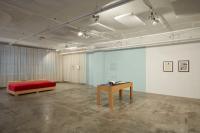
Ulises Carrión, a bookwork in many places, 2026, installation view. Photo by Evan Walsh.
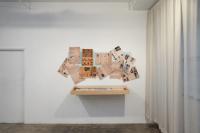
Ulises Carrión, a bookwork in many places, 2026, installation view. Photo by Evan Walsh.
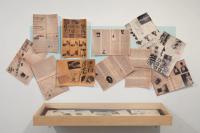
Ulises Carrión, a bookwork in many places, 2026, installation view. Photo by Evan Walsh.
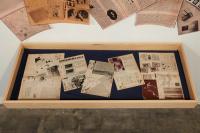
Ulises Carrión, a bookwork in many places, 2026, installation view. Photo by Evan Walsh.
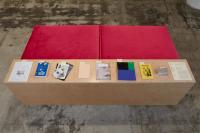
Ulises Carrión, a bookwork in many places, 2026, installation view. Photo by Evan Walsh.
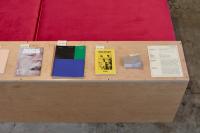
Ulises Carrión, a bookwork in many places, 2026, installation view. Photo by Evan Walsh.
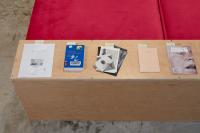
Ulises Carrión, a bookwork in many places, 2026, installation view. Photo by Evan Walsh.
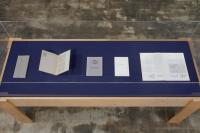
Ulises Carrión, a bookwork in many places, 2026, installation view. Photo by Evan Walsh.
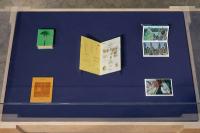
Ulises Carrión, a bookwork in many places, 2026, installation view. Photo by Evan Walsh.
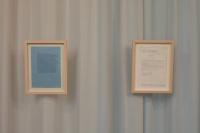
Ulises Carrión, a bookwork in many places, 2026, installation view. Photo by Evan Walsh.
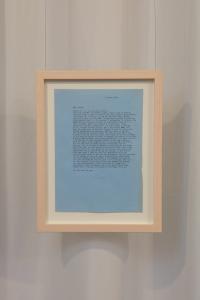
Ulises Carrión, a bookwork in many places, 2026, installation view. Photo by Evan Walsh.
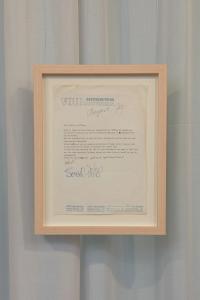
Ulises Carrión, a bookwork in many places, 2026, installation view. Photo by Evan Walsh.
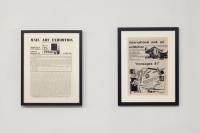
Ulises Carrión, a bookwork in many places, 2026, installation view. Photo by Evan Walsh.
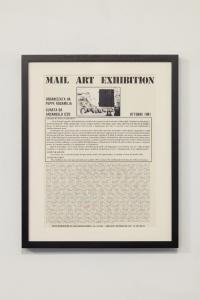
Ulises Carrión, a bookwork in many places, 2026, installation view. Photo by Evan Walsh.
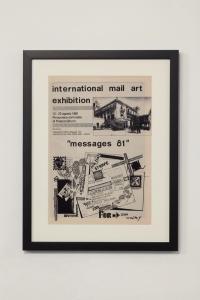
Ulises Carrión, a bookwork in many places, 2026, installation view. Photo by Evan Walsh.
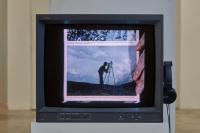
Ulises Carrión, a bookwork in many places, 2026, installation view. Photo by Evan Walsh.
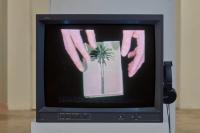
Ulises Carrión, a bookwork in many places, 2026, installation view. Photo by Evan Walsh.
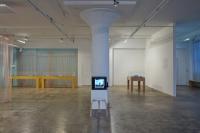
Ulises Carrión, a bookwork in many places, 2026, installation view. Photo by Evan Walsh.
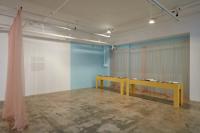
Ulises Carrión, a bookwork in many places, 2026, installation view. Photo by Evan Walsh.
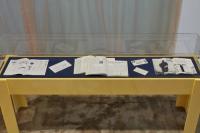
Ulises Carrión, a bookwork in many places, 2026, installation view. Photo by Evan Walsh.
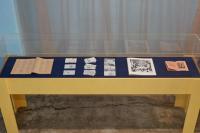
Ulises Carrión, a bookwork in many places, 2026, installation view. Photo by Evan Walsh.
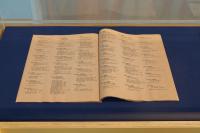
Ulises Carrión, a bookwork in many places, 2026, installation view. Photo by Evan Walsh.
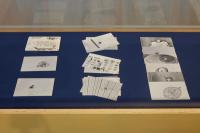
Ulises Carrión, a bookwork in many places, 2026, installation view. Photo by Evan Walsh.
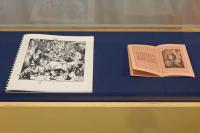
Ulises Carrión, a bookwork in many places, 2026, installation view. Photo by Evan Walsh.
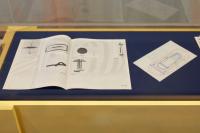
Ulises Carrión, a bookwork in many places, 2026, installation view. Photo by Evan Walsh.
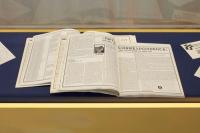
Ulises Carrión, a bookwork in many places, 2026, installation view. Photo by Evan Walsh.
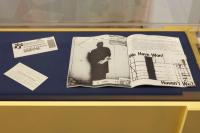
Ulises Carrión, a bookwork in many places, 2026, installation view. Photo by Evan Walsh.
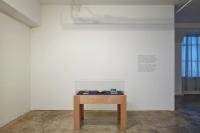
Ulises Carrión, a bookwork in many places, 2026, installation view. Photo by Evan Walsh.
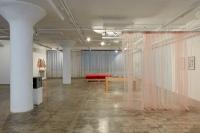
Ulises Carrión, a bookwork in many places, 2026, installation view. Photo by Evan Walsh.
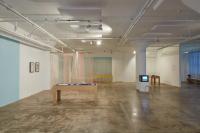
Ulises Carrión, a bookwork in many places, 2026, installation view. Photo by Evan Walsh.